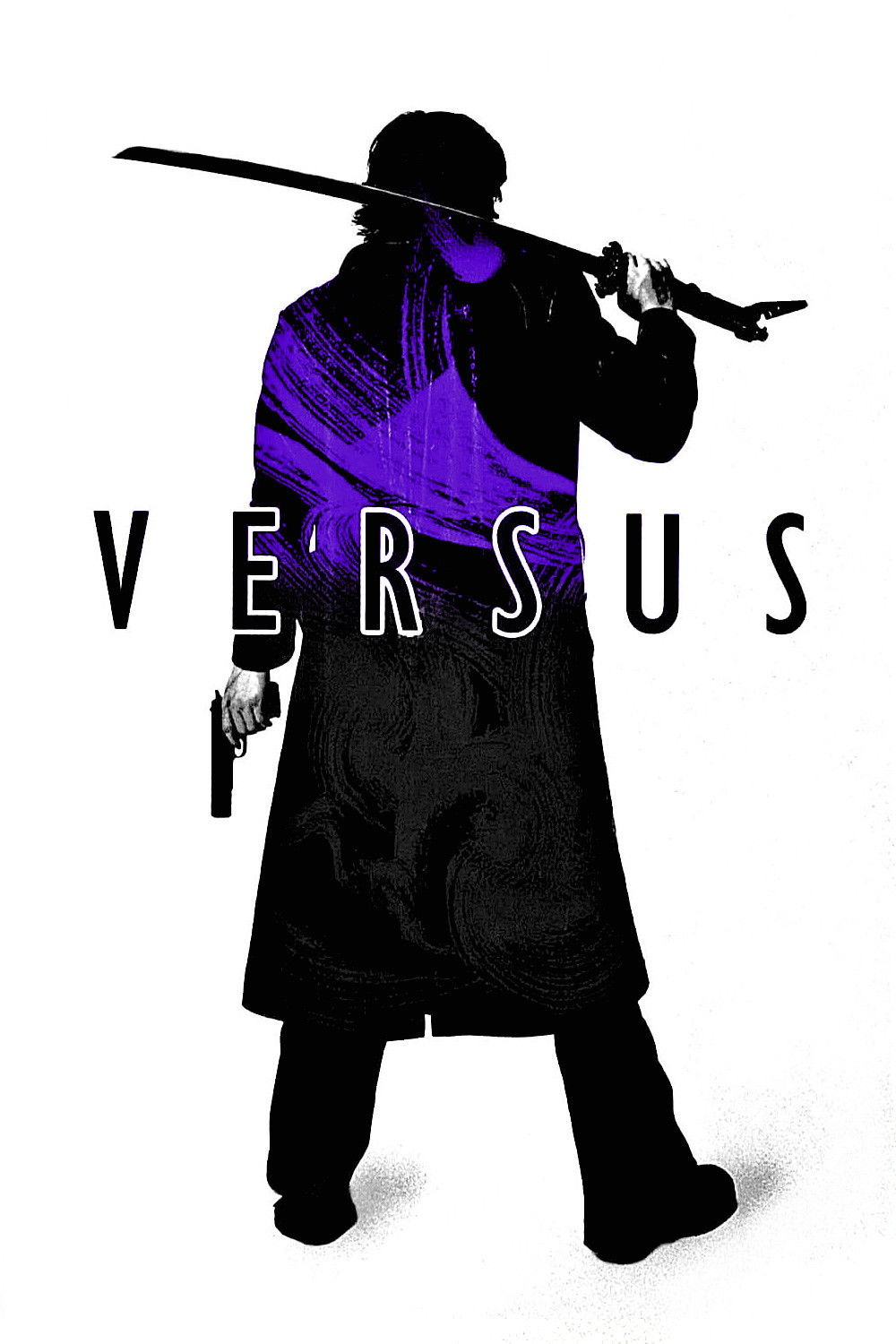
Versus (2000)

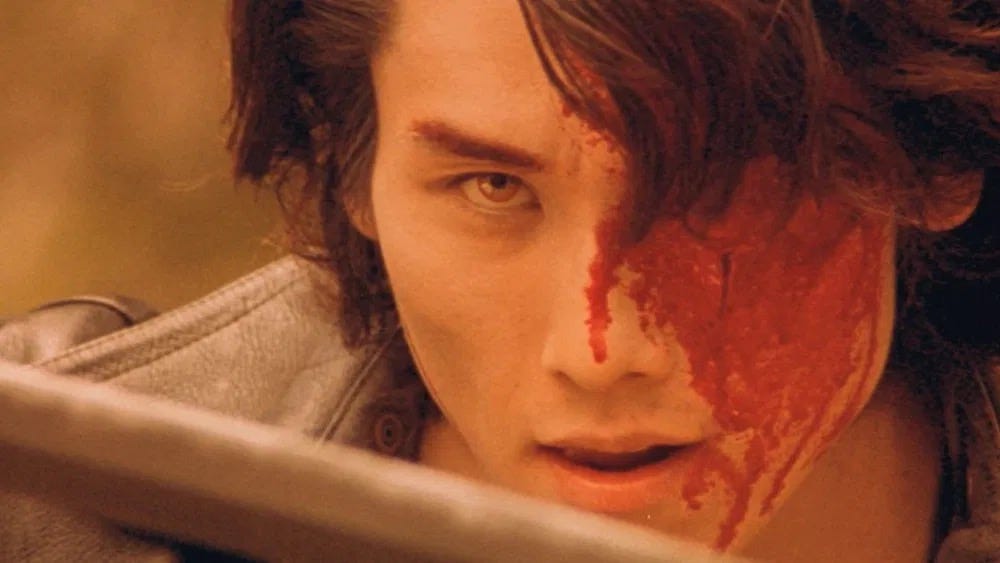
The late '90s were an interesting time for Asian film collectors. I was in my late teens and had a modest collection amassed from money earned on my low wage part time jobs. Unlike nowadays, in the era of the boutique physical media company, niche genres of film didn't get released here in the west unless it was thought that it would be a financial success.
This was especially true for foreign movies. If they did get a release it was often in butchered edited forms with terrible English dubs (thanks a lot Miramax). Film collectors had to rely on more nefarious means to acquire movies with many turning to bootlegs available on eBay or shady booths at conventions. These bootlegs often had horrible transfers and shoddy poorly timed English subtitles.
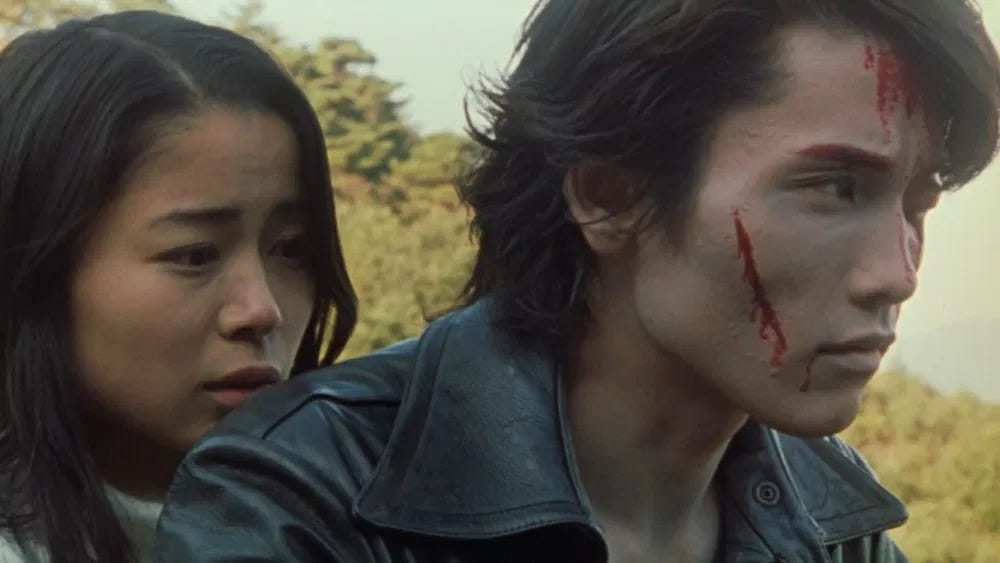
This was the hey-day of the VCD (Video CD) and they came hot and heavy from sellers with connections overseas. "Asian Extreme" was the new fad. It was during this time that Versus (2000) burst onto the scene and it was one of the most popular flicks in the Asian film circles, especially since it was riding the post The Matrix (1999) tidal wave of stylized action movies.
Versus takes place in The Forest of Resurrection which is home to the 444th portal to the netherworld. Two escaped convicts find themselves running through this area and they meet up with a band of Yakuza who use the glade to dispose of their victims. Unfortunately, one of the mystical properties of the forest incudes the ability to make the dead rise and all those bodies buried in shallow graves start to come back to attack everyone.
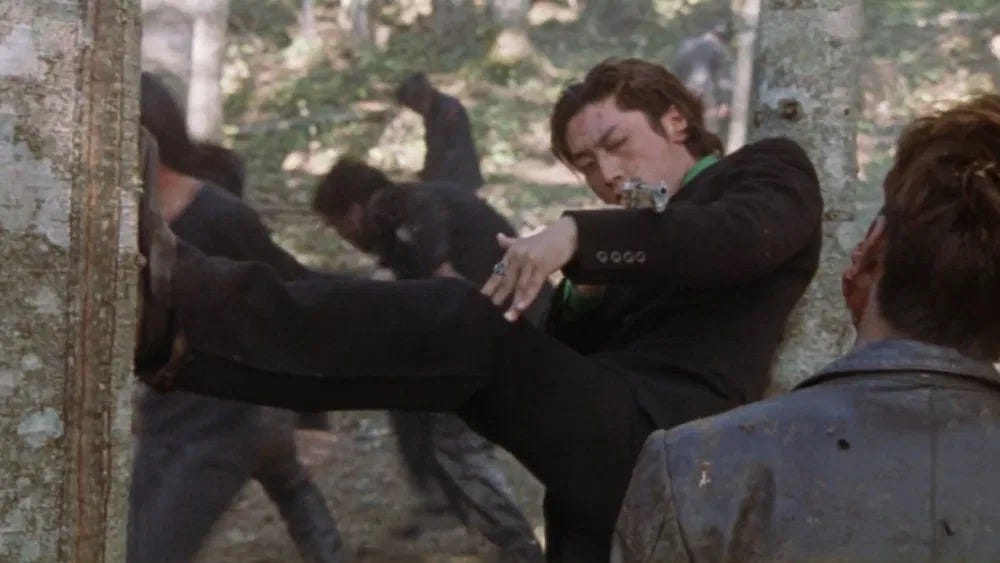
One of the nameless convicts, played by Tak Sakaguchi, seems to possess incredible fighting prowess, and he becomes the "hero' of the film, battling Yakuza and zombies alike in order to defend a mysterious woman (Chieko Misaka). On the sidelines is a dark enigmatic Yakuza boss (Hideo Sakaki) who has demonic powers and a connection to the forest.
Director Ryuhei Kitamura shot this film on a small 10K budget as he couldn't find anyone willing to invest in the idea. Japan wasn't known for their action movies at the time, it was seen as more the domain of Hong Kong and Hollywood, but Kitamura felt that Japan could contribute as well. He drew from chanbara, or "swordplay films" and mixed it with elements from traditional western style action from the likes of James Cameron.
Though the limited budget rears its head at times, particularly in the video quality of some sequences, the fight choreography and editing are outstanding, and propel the action scenes into a kinetic frenzy of blood and guts. The final sword fight is beautifully filmed and worth the price of admission.
Kitamura has a sly sense of humor as well having characters occasionally break the fourth wall and taking the time to subvert a few action tropes. One scene has our hero donning a cool leather trench coat a la Neo fromThe Matrix.
Later on he snags some sunglasses and puts them on completing the homage, but after his female companion disapproves of them he throws them to the side. Kitamura knows this film will be compared toThe Matrix and tosses those expectations aside with a wink and nod to the audience. There is also some comedy relief in the form of two cocksure police officers who love spouting random phases in English.
I first saw this when I was 19 and I was obsessed with it. Revisiting it as an almost 40-year-old, I still had a lot of fun with it, and I appreciate the craft that went into it especially with limited funds. It's interesting to see the change in the physical media industry in the past twenty years, from questionable bootlegs to lavish special editions, and it's fantastic that Arrow Video is giving genre films the royal treatment they deserve.
Ah, this sounds right up my alley! I'll be sure to add this to my watchlist. Any other film(s) you'd paid this with?